How to Choose a Metal Lure: Weight, Shape and Hook
Three decisions, in order: weight, shape, hook. Here is how to make each one, using the ranges we actually make.
1. Weight: distance and depth
Weight decides how far the lure casts and how fast it gets down. Go as light as the conditions allow, because smaller lures match smaller bait, and step up when you need distance, depth or to cut through current. These are the weights the brand’s own guides recommend:
- 10g to 15g
- Fussy fish on small bait, such as tailor mixed with bonito. A 15g red Lazer has taken bass in BP Dam.
- 25g
- The all-rounder for surf gutters and tailor. Also a favourite for jigging deep lake bass, with 35g.
- 35g to 50g
- Distant gutters, breakwalls and longtail tuna (50g).
- 35g to 70g
- Vertical spinning offshore for kingfish, trevally, amberjack, mackerel and queenfish.
- 40g to 170g
- Slow pitch jigs (40g to 80g) and Lazer Jigs (125g and 170g) with assist hooks.
2. Shape: bait and action
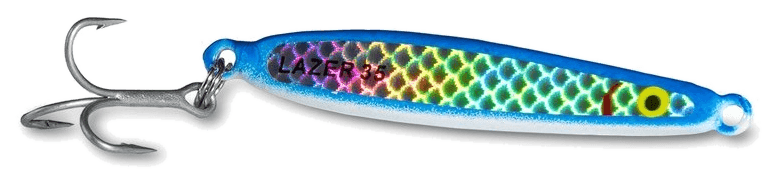
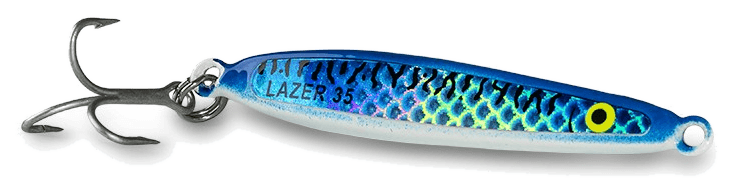
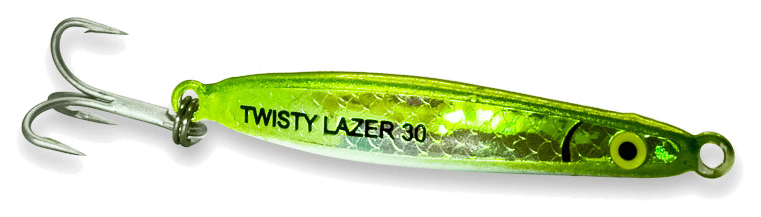
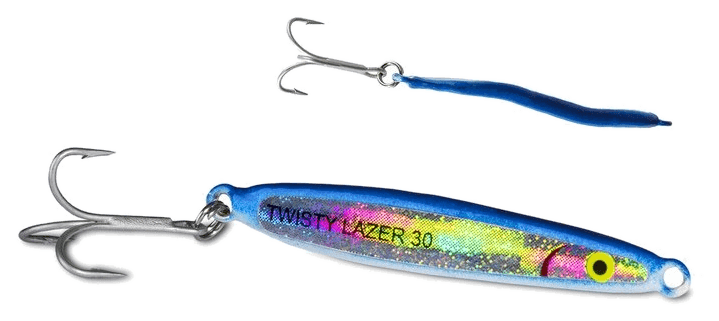
The original Lazer is straight and rear weighted for the longest cast. The Twisty Lazer adds an S-bend for more action on the retrieve. The Lazer Slug packs its weight into a compact body to match small bait without giving up distance. The Micro-Jig is the smallest, with holographic tapes for estuary fish, and the Teeny Poppa is a small metal popper for surface feeders.
3. Hook: single or treble
Every Lazer, Twisty Lazer, Lazer Slug and Dart is offered with either a VMC Needle Sharp Inline Single Hook or a VMC Saltwater Treble Hook, on an extra strong stainless steel ring. A treble puts more points in the water. In the Australian Boating feature, Brooke Frecklington says she prefers the single hook because it makes unhooking easier.
You can re-rig any lure with our VMC 7237CB inline singles or Mustad 3563 trebles.
Then pick a colour
Different fish prefer different colours on different days, so carry a range. Our colour guide collects what the brand’s guides have found for each species.